Houston, Texas
Houston's 504 Baptist Congregations: How One Metro Holds the Densest Baptist Presence in Texas
Three migration streams — Southern Baptist, Independent Baptist, and National Baptist — built the Houston Baptist grid between 1848 and 1980.
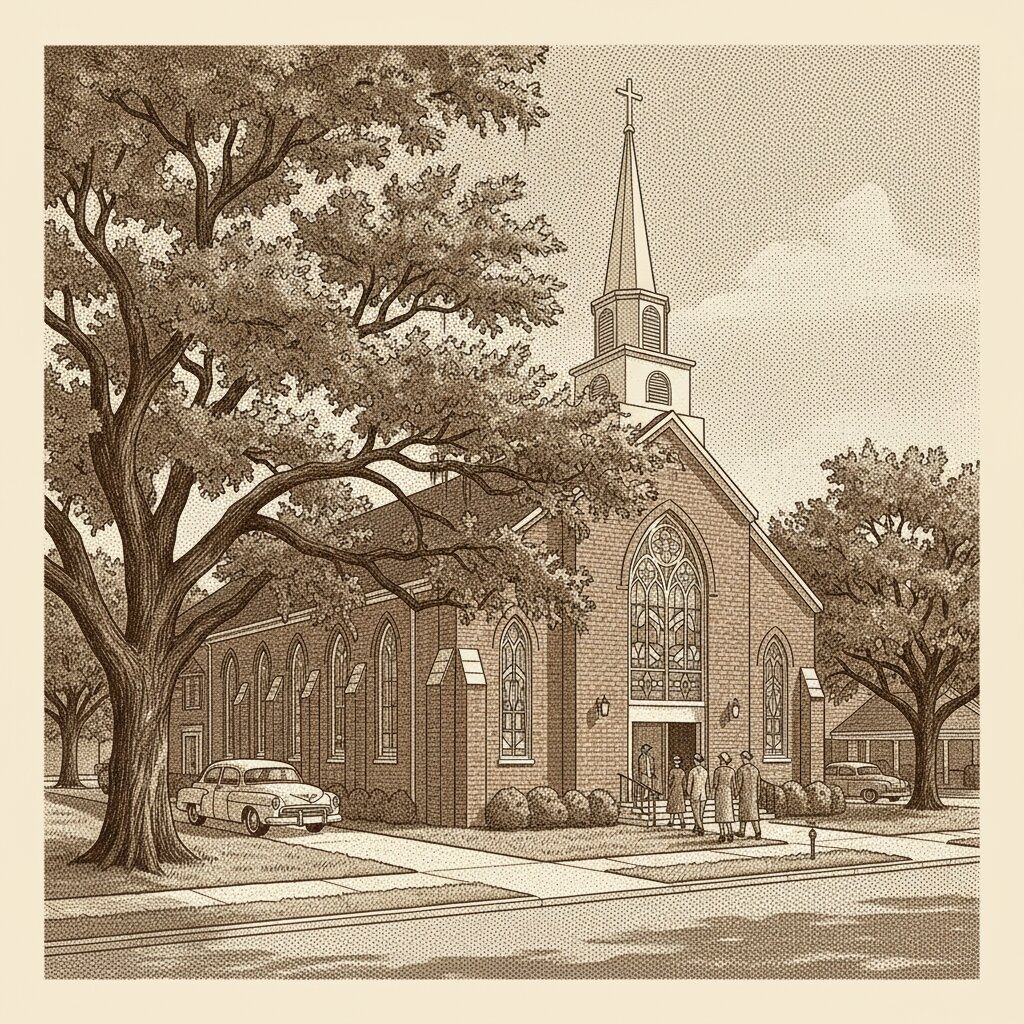
Houston holds 504 Baptist congregations inside its city limits, the densest Baptist presence of any American metro: a 1848 Southern Baptist mission layer, a 1945 Independent Baptist suburban layer, and a 1920 Black Baptist migration layer stacked on the same coastal plain.
Houston holds 504 Baptist congregations inside its city limits, the densest Baptist presence of any single metro in the United States and roughly 7% of Texas's statewide 7,185 Baptist parishes. The figure reflects the city's post-1930 demographic pattern: a southern metropolis that absorbed rural Texas and Louisiana Baptist populations, and then absorbed a Black Baptist migration from East Texas and the Mississippi Delta. Houston's Baptist grid is a consolidation of three migration streams, not a single founding tradition.
Three Baptist streams converge on Harris County
Houston's Baptist count comes from three distinct historical sources. The first is the Southern Baptist Convention, which sent organized mission work into the Texas coastal plain from 1848 onward and which today accounts for roughly 60% of Houston's Baptist parishes by building count. The second is the Independent Baptist movement, which planted churches during the post-1945 suburban expansion through Humble, Spring, and Katy. The third is the National Baptist Convention USA and its predecessor Black Baptist associations, which grew from the Third Ward, Fifth Ward, Sunnyside, and Acres Homes during the 1920–1960 Great Migration north and west from East Texas.
South Main Baptist and the mainline historic congregations
Near South Main sits
Good Hope and the missionary Baptist grid
Copperfield, Clear Lake, Shady Acres: the suburban planting wave
Houston's suburban Baptist plantings after 1980 produced parishes like
Why Dallas does not share the count
Dallas, 240 miles north, holds 298 Baptist parishes, about 60% of Houston's figure. The gap is not a function of metro size; Houston and Dallas-Fort Worth are within 20% of each other on census population. The gap reflects the different settlement histories of the two metros: Houston drew rural East Texas Baptist populations through the port and the oil industry, while Dallas drew rural North Texas and Oklahoma Baptist populations through the cotton and later banking industries. North Texas carries a stronger Methodist thread that softens the Baptist count; the coastal Houston pattern is more singularly Baptist.
Sources and further reading
- Southern Baptist Convention — church finder
- Baptist General Convention of Texas
- Wheeler Avenue Baptist Church (Rev. William A. Lawson)
- Cooperative Baptist Fellowship
- Baptist Missionary Association of America
What to read next on Churches List
- The Houston city page lists all 1,554 parishes across every tradition inside the Houston city limits.
- The Baptist tradition page indexes every Baptist parish in the United States.
- The Texas directory holds 7,185 Baptist congregations, the largest Baptist count of any state.