Dallas-Fort Worth
Dallas (953) vs. Fort Worth (243): Two Metros, One Baptist Heritage, Very Different Sunday Grids
Thirty miles apart, connected by one freeway, with four-to-one different parish counts.
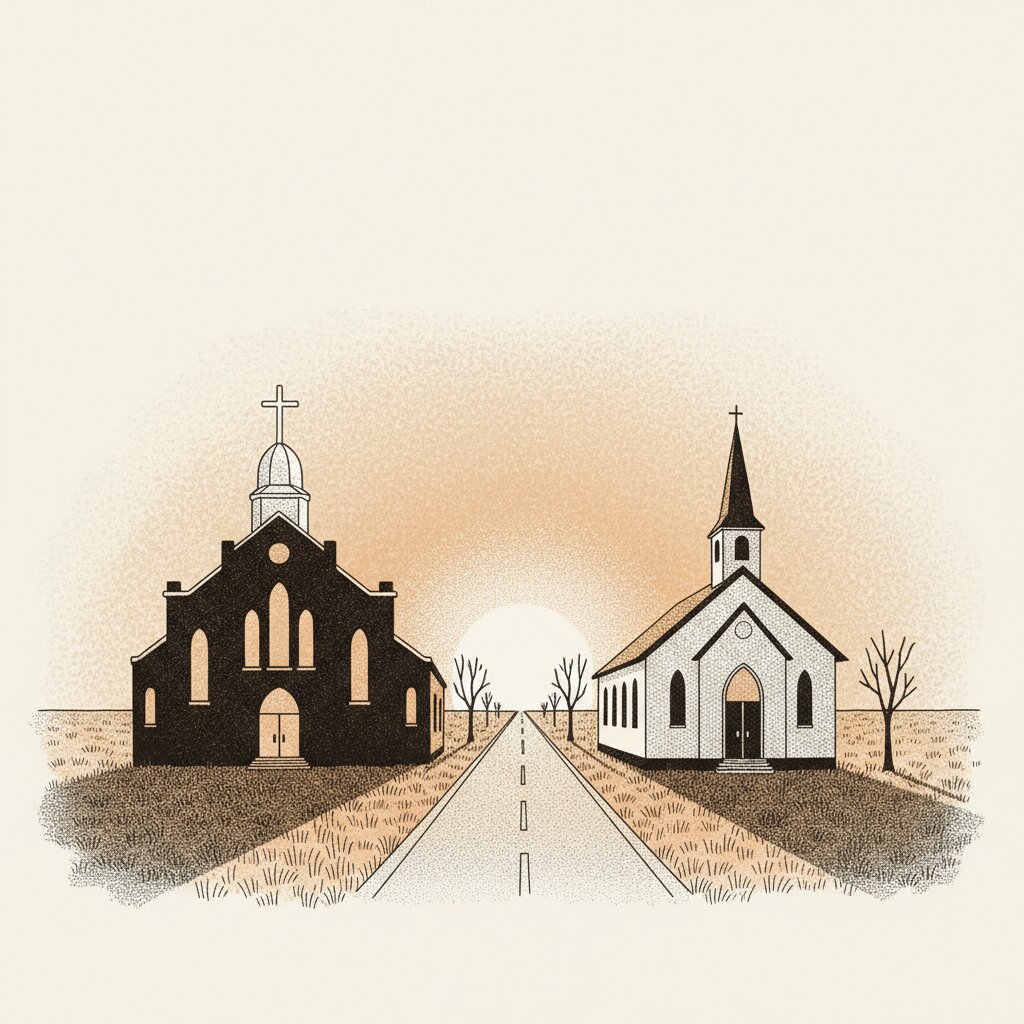
Dallas holds 953 parishes inside its city limits; Fort Worth, 30 miles west and nearly equal in population, holds 243. The four-to-one gap reflects two different Protestant settlement histories layered on the same North Texas prairie.
Dallas holds 953 parishes inside the city limits. Fort Worth, 30 miles west on Interstate 30 and population 980,000, holds 243. The four-to-one gap between two cities of comparable population on the same plains, in the same state, connected by the same freeway, is the sharpest metropolitan parish-count disparity in the American South. The gap is not a measurement artefact. It reflects two different religious settlement histories layered on the same prairie.
Dallas: the cotton-banking city that absorbed a Black Protestant migration
Dallas grew from the 1870s railroad junction to the cotton-trade and banking capital of North Texas between 1890 and 1930. The city's Black Protestant population grew from the 1915–1950 migration off East Texas and Southeast Oklahoma cotton farms into the South Dallas, West Dallas, and South Oak Cliff neighbourhoods. Each migration wave left a church grid. South Dallas alone holds more than 80 Black Baptist, AME, and Church of God in Christ parishes. Oak Cliff, south of the Trinity River, carries another 120.
Fort Worth: the cattle-and-oil city that stayed Anglo-Protestant
Fort Worth's demographic history runs differently. The city grew as a cattle-trail terminus (the Chisholm Trail stockyards opened in 1872) and later as an oil-services town after the 1917 Ranger Field discoveries. Fort Worth's Black population was meaningfully smaller than Dallas's through 1960 (roughly 18% vs 25%), and its Hispanic population grew meaningfully later than Dallas's. The city's parish grid is therefore thinner in the two traditions — Black Baptist and Hispanic Catholic — that drive Dallas's high count.
Fort Worth's parishes skew toward mainline and evangelical white Protestant categories.
Dallas's Catholic count also outpaces Fort Worth's
The Dallas-Fort Worth Catholic split mirrors the overall split. The Diocese of Dallas holds 71 parishes; the Diocese of Fort Worth holds 90 — but the Diocese of Fort Worth covers 28 counties compared to Dallas's nine, which gives Fort Worth a broader but less dense Catholic grid. Inside the Dallas city limits sit 43 Catholic parishes; inside Fort Worth's, 21. The Dallas Catholic parishes serve the large Hispanic population on the city's south and west sides.
The 2008 Episcopal split left an asymmetric footprint
The Episcopal Diocese of Fort Worth left the Episcopal Church in 2008, an outcome that mattered more for Fort Worth than for Dallas. Fort Worth lost the pre-split parishes to a property dispute that the Texas Supreme Court did not resolve until 2021 (in favour of the continuing Episcopal Diocese of Fort Worth, not the departing ACNA Diocese of Fort Worth). Dallas's Episcopal diocese stayed in the Episcopal Church without a split. The net effect in 2025 is that Fort Worth has two parallel Anglican parish grids (Episcopal Church and ACNA) covering the same city, while Dallas has one.
Why the gap will not close
Dallas's parish count will continue to grow faster than Fort Worth's for structural reasons. The Black Baptist megachurch tradition is still expanding in Dallas. The Hispanic Catholic population is growing faster in Dallas. Non-Denominational plantings continue in both metros but concentrate in Dallas's fringe suburbs (Frisco, McKinney, Plano) rather than in Fort Worth's (Arlington is largely split between the two). The 4-to-1 parish-count gap of 2025 is likely to widen through 2035 rather than converge.
Sources and further reading
- Diocese of Dallas (Roman Catholic)
- Diocese of Fort Worth (Roman Catholic)
- Episcopal Diocese of Dallas
- Episcopal Diocese of Fort Worth (continuing)
- The Potter's House of Dallas
What to read next on Churches List
- The Dallas city page lists all 953 parishes across every tradition.
- The Fort Worth city page lists all 243 parishes.
- The Texas directory holds 7,185 Baptist congregations statewide alongside every other tradition.