Philadelphia, Pennsylvania
Philadelphia's Row-Grid Parishes: William Penn's 1683 Plan and the 1,227 Churches Fitted Into It
A 1683 street grid and a 1701 charter of religious tolerance set the envelope that every Philadelphia parish after 1790 had to fit.
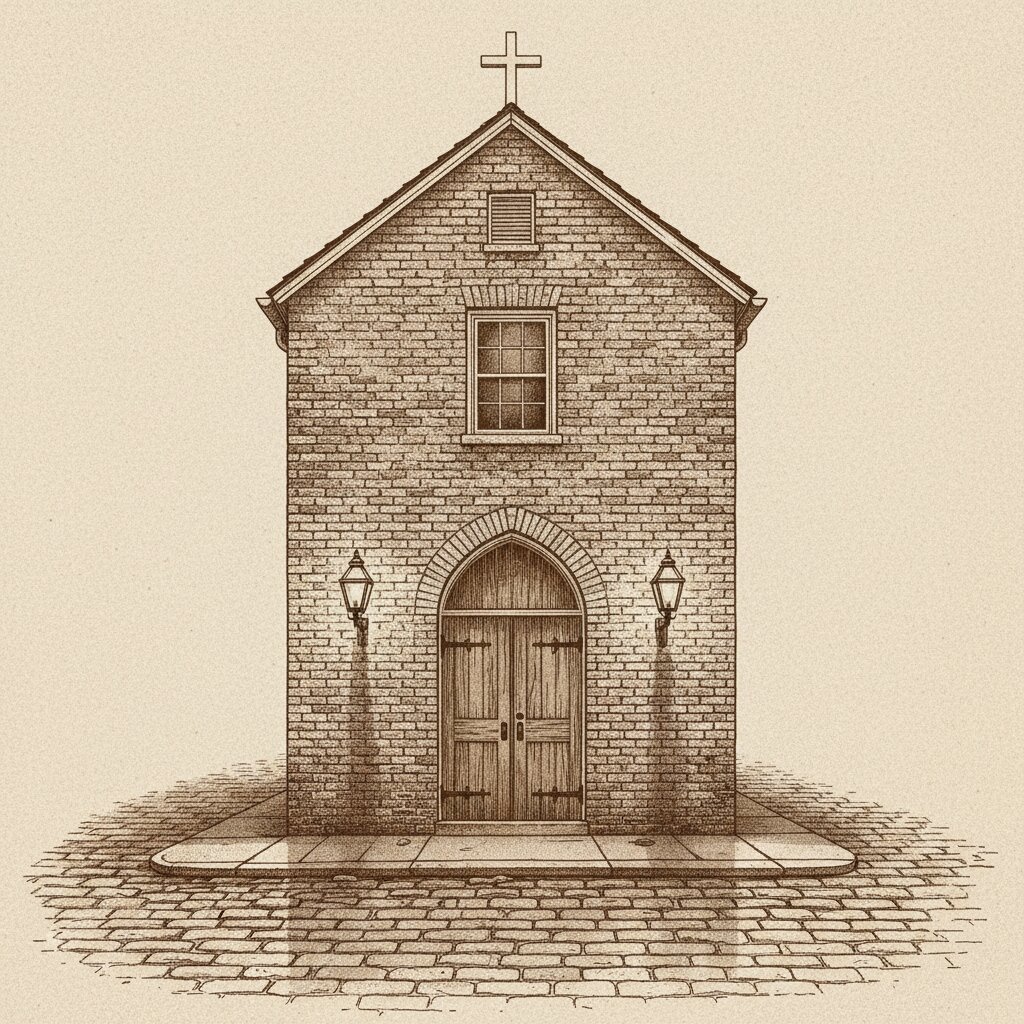
Philadelphia holds 1,227 parishes inside the city limits, on a 1683 grid laid out by William Penn that predated every other American city plan except New Amsterdam's. The grid's narrow row-house lots determined what every later parish could look like.
Philadelphia holds 1,227 parishes inside its city limits, a count shaped by three forces that set very early: William Penn's 1683 street grid, the 1701 Charter of Privileges that made Pennsylvania the first American colony to guarantee Roman Catholic worship, and the 1820s row-house building boom that determined how much a neighbourhood could fit. The parishes that survived to the present sit mostly in small buildings on narrow lots because that is what Penn's grid allowed.
Penn's grid and the row-house parish footprint
Penn's 1683 plan laid out Philadelphia on a rectangular street grid with four squares and a central town square. Building lots were narrow (typically 16 to 20 feet wide) and long. Churches built after 1790 had to fit that envelope, which is why Philadelphia's older parishes tend to be tall and deep rather than broad. Mother Bethel AME, Old St. Joseph's, Old St. Mary's, and the original Christ Church building all share this plan: a narrow front facing the street, a long nave, and a small rear yard. The plan persists in Center City Catholic and Protestant parishes alike.
Mother Bethel AME (1794): the oldest African Methodist Episcopal parish in the country
The St. John Neumann National Shrine at 5th and Girard
The Calvary Chapel Philadelphia outlier on North Broad Street
Old St. Joseph's (1733) and the 1701 Catholic exception
Pennsylvania was the only American colony that permitted open Roman Catholic worship through the eighteenth century, a legacy of Penn's 1701 Charter of Privileges. Old St. Joseph's Church at 321 Willings Alley, founded in 1733, was therefore the only publicly-operating Catholic parish in the British Atlantic colonies at its opening. The present 1838 building sits at the back of a walled courtyard off a narrow alley, a plan that reflects the Penn-era Catholic practice of keeping the church discreet even when legally permitted. Old St. Joseph's is typically grouped with the four oldest surviving American Catholic parish buildings, along with Saint Peter's in New York, Saint Mary's in Alexandria, and the Basilica of the Assumption in Baltimore.
Resurrection and Holy Innocents: the Kensington and Port Richmond ethnic parishes
Saint John the Evangelist on 13th Street
Sources and further reading
- Archdiocese of Philadelphia
- African Methodist Episcopal Church (denominational site)
- Mother Bethel African Methodist Episcopal Church
- Independence National Historical Park (NPS)
- Historical Society of Pennsylvania
What to read next on Churches List
- The Philadelphia city page holds all 1,227 parishes across every tradition inside the city limits.
- The Catholic tradition page and AME tradition page for the two traditions most tied to Philadelphia's founding.
- The Pennsylvania directory holds 13,400 parishes across the state, second only to Texas.