Upper Midwest
Wisconsin, Minnesota, and the Dakotas: Why the Upper Midwest Holds 36% of American Lutheran Congregations
A nineteenth-century Norwegian, Swedish, and German migration laid a Lutheran parish every five miles across four states.
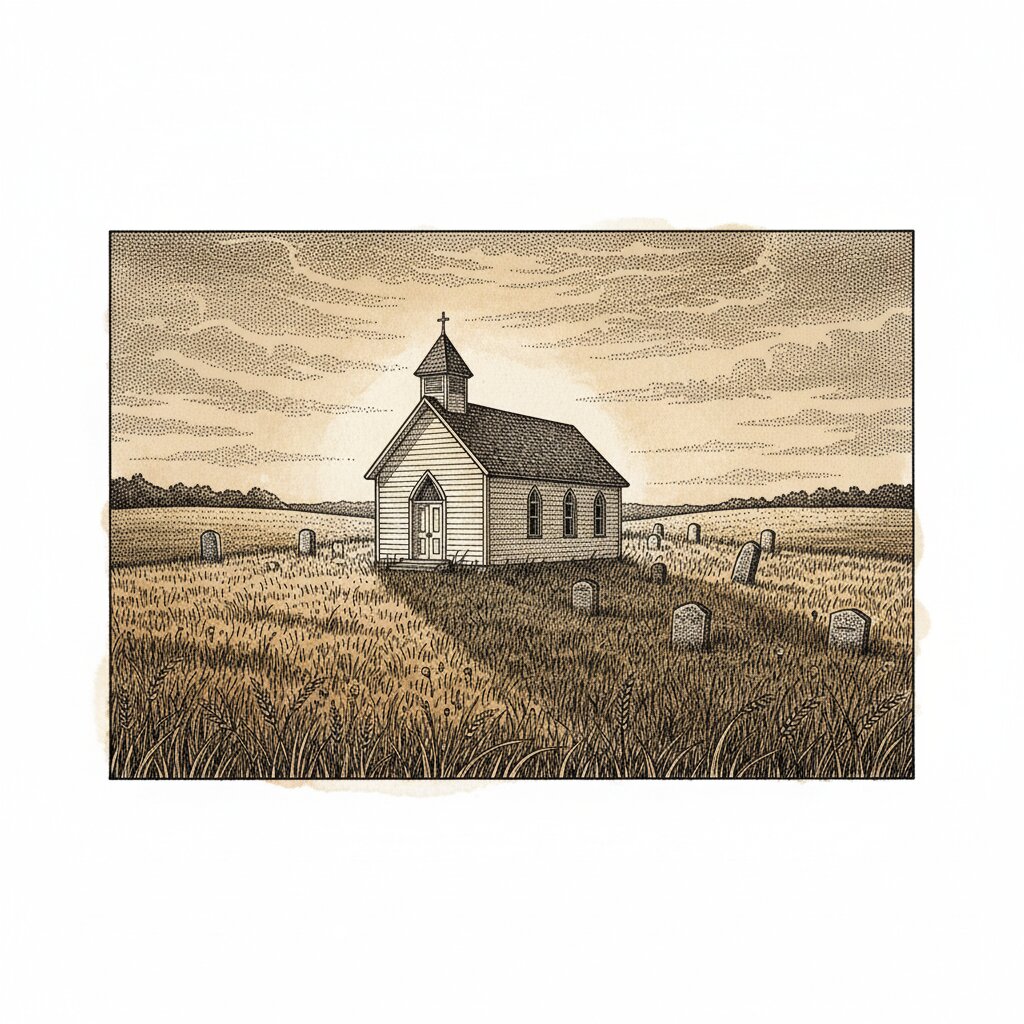
Wisconsin, Minnesota, and the two Dakotas hold 4,034 Lutheran congregations, 23% of the American Lutheran total. Extended to include Iowa and Nebraska, the Upper Midwest Lutheran share climbs to roughly 36% of all American Lutheran parishes.
Wisconsin, Minnesota, and the two Dakotas together hold 4,034 Lutheran congregations, or 23% of the American Lutheran parish total (17,216). If the count extends to include Nebraska, Iowa, and Illinois's northern counties, the Upper Midwest Lutheran share climbs to roughly 36%. The concentration reflects nineteenth-century Norwegian, Swedish, German, and Finnish migration routed through the Great Lakes ports of Milwaukee, Duluth, and Chicago between 1840 and 1910. The parish grid those settlers built is still standing, and in most rural counties no other denomination matches its density.
Minnesota: 1,758 Lutheran parishes, four times the state's Baptist count
Minnesota records 1,758 Lutheran congregations, against only 443 Baptist. The four-to-one Lutheran dominance is unique among American states. Minnesota's Lutheran population descends from three distinct migrations. The Norwegian migration arrived primarily between 1860 and 1910, settled the Red River Valley, central Minnesota, and Rochester's southern counties, and carries the largest share (roughly 900 parishes). The German Lutheran migration arrived earlier (1840–1890) and settled the Twin Cities, Stearns County, and the lower Mississippi counties (roughly 550 parishes). The Swedish Lutheran migration arrived 1850–1910 and settled the Chisago, Isanti, and Kanabec lakes counties (roughly 280 parishes). Finnish Lutherans from the Iron Range (1880–1920) added another 70.
The denominations that absorbed these populations split along ethnic lines until the 1980s. The Evangelical Lutheran Church in America (ELCA), formed in 1988, merged the Lutheran Church in America, the American Lutheran Church, and the Association of Evangelical Lutheran Churches. Most of Minnesota's Norwegian, Swedish, and moderate German parishes are now ELCA. The Lutheran Church–Missouri Synod (LCMS), which retained its independence, holds the more conservative German-heritage parishes.
Wisconsin: 1,465 Lutheran parishes and the WELS heartland
Wisconsin's 1,465 Lutheran parishes make it the second-largest Lutheran state. Wisconsin is also the heartland of the Wisconsin Evangelical Lutheran Synod (WELS), the third-largest Lutheran body in the country. WELS is the theologically most conservative of the major Lutheran bodies, rejecting ecumenical fellowship with the LCMS as well as the ELCA. WELS holds roughly 380 of Wisconsin's Lutheran parishes, concentrated in Milwaukee, Watertown, and the Fox River Valley. ELCA holds about 700 parishes statewide; LCMS holds about 310; small independent Lutheran bodies (Evangelical Lutheran Synod, Church of the Lutheran Confession, Apostolic Lutheran) account for the remainder.
North Dakota: 462 Lutheran parishes for a population of 780,000
North Dakota records 462 Lutheran parishes in a population of 780,000, or one Lutheran parish for every 1,690 residents. The ratio is the densest Lutheran-per-capita figure of any state. Most of North Dakota's Lutheran parishes are small rural congregations of 30 to 150 members, founded between 1870 and 1920 during the Dakota wheat-farming settlement. Many serve populations of two or three extended Norwegian, Swedish, or German families and are sustained by shared pastorates (one pastor for two or three nearby parishes).
North Dakota's Lutheran grid is visible on any county plat map. Cass County (Fargo) alone holds more than 90 Lutheran parishes. The town of Mayville, population 1,700, holds three Lutheran churches. Driving US-2 or US-52 across the state, a Lutheran church appears roughly every five miles.
South Dakota: 349 parishes and the Sioux Falls regional centre
South Dakota's 349 Lutheran parishes follow a similar pattern to North Dakota's but at lower density because the southern state had more Scandinavian Lutheran settlement in its eastern half and less in the western High Plains. Sioux Falls, the state's largest city, anchors the regional ELCA administration through the South Dakota Synod and holds roughly 30 Lutheran parishes itself.
Why the Baptist presence never absorbed the grid
Wisconsin, Minnesota, and the Dakotas together hold only 1,157 Baptist parishes, far fewer than their Lutheran counts. The Baptist missionary work that filled the Ohio country and the South in the early 1800s largely bypassed the Upper Midwest because the region did not settle at scale until after 1850, when the Lutheran migration was already dominant. By the time Southern Baptist and Northern Baptist mission work reached the Upper Midwest in significant form (the 1920s), the Lutheran parish grid was complete.
The parish-sharing pattern: one pastor, three congregations
A distinctive feature of Upper Midwest Lutheran life is the multi-point parish, in which a single pastor serves two or three congregations that pool his salary and housing. The arrangement predates rural depopulation but has become essential to sustaining rural Lutheran presence since 1980. A typical North Dakota multi-point parish might hold Sunday services at three churches within 20 miles, each with 30 to 80 regular worshippers, the pastor cycling among them for sermons while the other two congregations hear readings led by lay members.
Sources and further reading
- Evangelical Lutheran Church in America (ELCA)
- Lutheran Church–Missouri Synod (LCMS)
- Wisconsin Evangelical Lutheran Synod (WELS)
- Concordia Theological Seminary, Fort Wayne
- Luther Seminary, St. Paul
What to read next on Churches List
- The Wisconsin, Minnesota, North Dakota, and South Dakota directories for the Upper Midwest Lutheran heartland.
- The Lutheran tradition page indexes ELCA, LCMS, WELS, and independent Lutheran parishes.
- The Baptist–Lutheran Inversion for the geographic split between the two traditions.