United States
The Non-Denominational Acceleration: 35,730 American Congregations With No Central Authority
The fastest sustained tradition expansion in American religious history, growing at 8% per year for three decades.
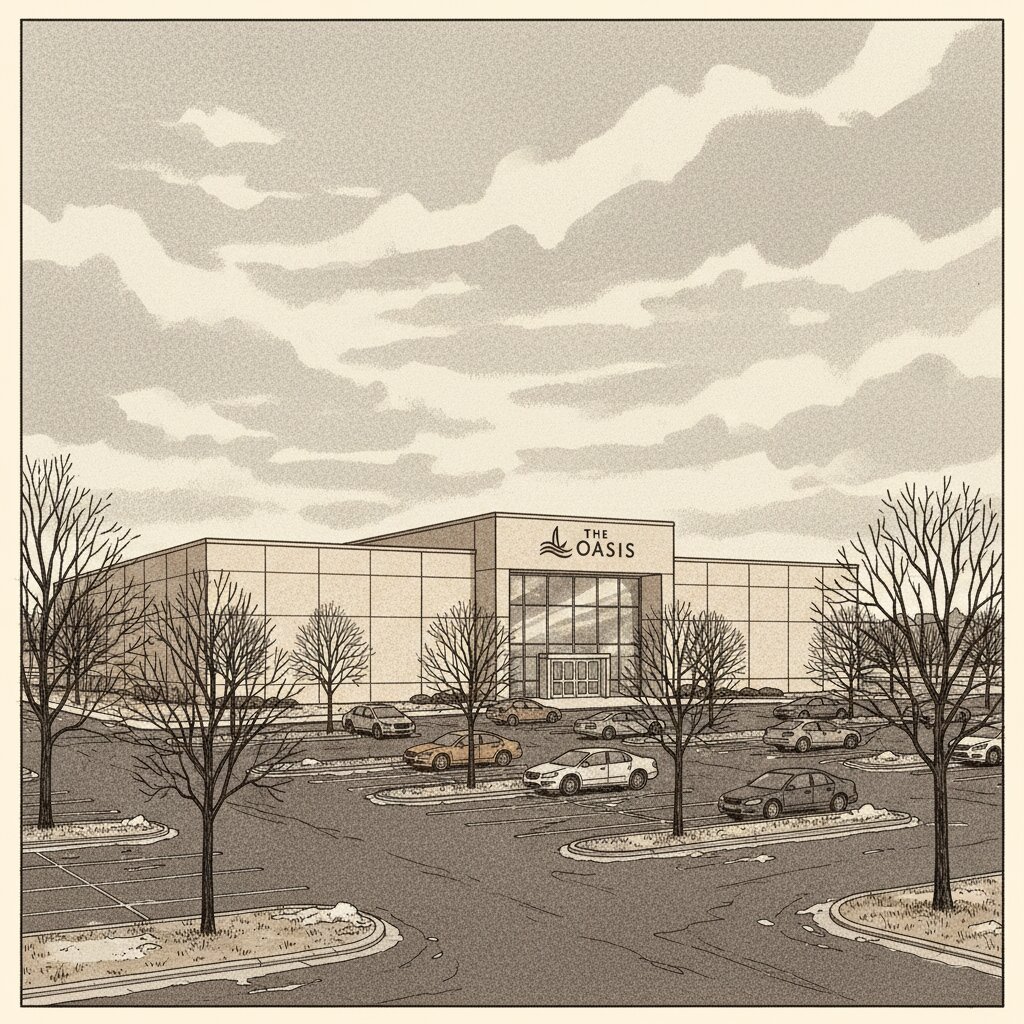
Non-Denominational congregations now outnumber the United Methodist Church, the Presbyterian Church USA, and the Episcopal Church combined. The tradition has grown at 8% per year since 1990, a rate no historic American denomination has matched.
Non-Denominational congregations have overtaken every historic American Protestant denomination except the Baptist family in total parish count. Churches List records 35,730 Non-Denominational congregations in the United States, a total that in 1970 would have been under 5,000. The growth rate is roughly 8% per year from 1990 through 2020, the fastest sustained tradition expansion in American religious history. Non-Denominational congregations now outnumber the United Methodist Church, the Presbyterian Church USA, and the Episcopal Church combined.
What "Non-Denominational" actually is
A Non-Denominational congregation is, by definition, a single-parish unit with no formal membership in a denominational body. In practice the label covers three different kinds of parish. The first is a fully-independent congregation with its own governance, doctrine, and hiring, typically led by a founder-pastor who serves indefinitely. The second is a parish formally independent but part of a loose fellowship network (Calvary Chapel, Vineyard USA, Acts 29, Sovereign Grace Churches) that shares doctrine, church-planting methods, and occasionally music and preaching resources without having formal denominational authority. The third is a former-denominational parish that has disaffiliated (typically from the UMC or SBC) and rebranded itself as Non-Denominational without changing its building, staff, or congregation.
The 1980–2010 megachurch wave
The Non-Denominational growth curve was driven initially by the megachurch movement, which transformed the American Protestant landscape between 1980 and 2010. Willow Creek Community Church in South Barrington, Illinois (founded 1975), Saddleback Church in Lake Forest, California (founded 1980), and Lakewood Church in Houston (founded 1959 as an Assemblies of God parish, Non-Denominational since 2000) each grew past 20,000 weekly attendees. Their models — seeker-sensitive worship, small-group home-discipleship, contemporary music, large-campus architecture — spread through roughly 1,700 American megachurches (2,000+ weekly attendance), of which more than 60% are Non-Denominational.
The ex-denominational wave: 2010–2024 UMC and SBC disaffiliations
A second growth wave came from parish disaffiliations. The United Methodist Church lost roughly 7,400 American parishes between 2019 and 2024 to disputes over LGBT clergy and marriage. Of those, roughly 3,300 joined the Global Methodist Church (a new denomination), and roughly 4,100 went Non-Denominational. The Southern Baptist Convention lost a smaller but meaningful cohort of Calvinist parishes to Non-Denominational status during the 2010s. The Presbyterian Church USA has lost roughly 1,500 parishes since 2006, most to the ECO (Evangelical Covenant Order of Presbyterians) but some to the Non-Denominational category.
Five characteristic features of the typical Non-Denominational parish
A 2023 survey of 800 American Non-Denominational congregations found five common features. First, a founder-pastor or founder-couple still leads the parish in roughly 60% of cases. Second, the parish uses contemporary worship (drums, electric guitars, praise-band format) in 85% of cases. Third, the parish names tend to drop the word "Church": "LifePoint," "The Bridge," "Elevate," "North Point," "Fellowship." Fourth, the parish holds weekend services at multiple service times rather than a single Sunday morning slot, and many hold Saturday evening as a primary service. Fifth, the parish's theology is almost universally Evangelical and broadly dispensationalist, with a minority holding to Reformed/Calvinist positions (especially Acts 29 and Sovereign Grace parishes).
Why Non-Denominational congregations outgrow denominational ones
The usual explanation — American distrust of institutions — understates what is happening. The deeper factor is that Non-Denominational congregations can plant and close faster than denominational bodies can. A Non-Denominational parish that fails after three years closes without process. A denominational parish that fails after three years usually triggers a multi-year closure procedure, property dispute, and pastoral reassignment. The administrative overhead of denominational accountability has become a liability for new plantings.
At the same time, established denominational parishes continue to close at higher rates than they open. The UMC has closed roughly 400 parishes per year since 2015. The ELCA has closed roughly 100 per year. The Episcopal Church has closed roughly 50 per year. The Non-Denominational sector, by contrast, opens roughly 3,500 new parishes annually and closes roughly 1,800, for net annual growth of 1,700.
Where Non-Denominational congregations concentrate
Non-Denominational parishes cluster in the South and West. Texas holds roughly 2,700, California 2,400, Florida 1,800, Georgia 1,600. The Upper Midwest (Minnesota, Wisconsin, the Dakotas) and the historic Northeast (Massachusetts, Connecticut, Rhode Island) have the lowest Non-Denominational density. The pattern reflects two factors: the Non-Denominational model emerged from Southern California and Texas evangelical networks, and the historic denominational grid in the Upper Midwest and Northeast gives new parishes less room to plant without competing directly with an established congregation a mile away.
Sources and further reading
- Hartford Institute for Religion Research — megachurch database
- Pew Research Center — Religious Landscape Study
- Global Methodist Church
- Acts 29 Network
- Association of Religion Data Archives (ARDA)
What to read next on Churches List
- The Non-Denominational tradition page indexes all 35,730 parishes in the tradition.
- The Baptist, Methodist, and Presbyterian traditions for comparison.